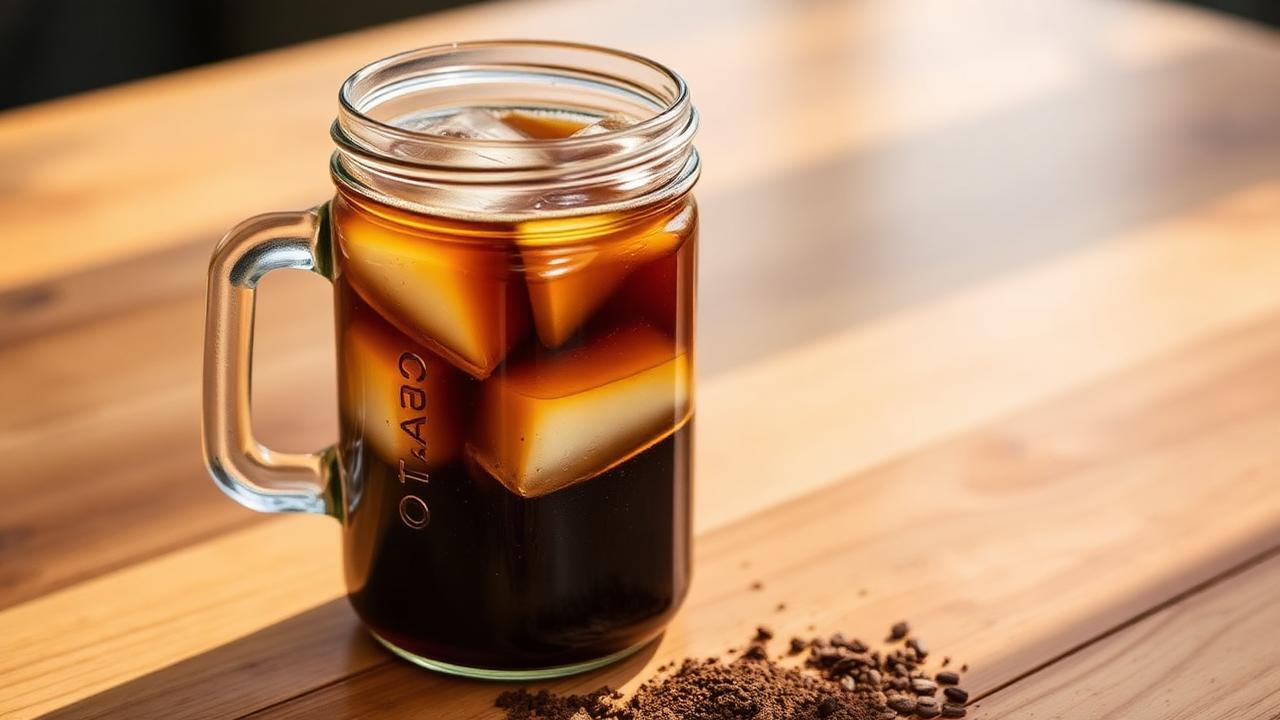
Cold brew uses cool or room-temperature water and a long steep, so there is no pouring pattern to manage. It still takes attention: grind, ratio, steep time and filtration affect the result, while clean equipment and prompt refrigeration matter for storage. The recipes here are practical starting examples rather than a guarantee of strength, flavour or shelf life.
Why cold water changes the flavour
Water temperature changes extraction, and a long cool steep is not simply a slower copy of a hot brew. The beverage depends on grind size, coffee-to-water ratio, steep duration, water and filtration. A clock time that works in one jar may taste different in another setup, so use the timing below as an experiment and make a note of your own result.
Some people find cold coffee less sharp or bitter than a hot brew, but taste and measured acidity are not the same thing. Cold brewing does not guarantee a lower pH or a specific health effect. Sweetness, chocolate, fruit and acidity are tasting impressions that vary with coffee and recipe; describe what you notice instead of treating one flavour profile as a property of all cold brew.
Cold brewing can produce a different balance of aromas from hot methods. A light roast may taste delicate to one person and underwhelming to another, while a medium or dark coffee may work well for a particular recipe. No roast or origin is automatically wasted in cold brew. Try a small batch before deciding which beans justify the longer preparation.
Grind and ratio
Start with a coarse setting if your usual filter grind makes the drink too muddy or difficult to filter, then adjust from experience. Comparisons such as “raw sugar” are approximate because grinders produce a range of particle sizes. Sifting can remove some large or small particles, but it also changes the recipe and may waste coffee; use it only if the extra step gives you a result you prefer.
For a concentrate you plan to dilute, a possible first trial is 200 g of coffee to 1,200 g of water, or a 1:6 ratio by mass. For a ready-to-drink version, use more water and compare the result with a hot-filter recipe you enjoy. These are not universal strengths: the amount retained by grounds and the final serving size affect what reaches the glass. Concentrate can be convenient, but it does not automatically store longer or taste better.
Use the tool: the Cold Brew Ratio & Timer converts between concentrate and ready-to-drink strengths and tells you how much water or milk to add per serving.
Steep time and temperature
Steep time varies with grind, water temperature, ratio and personal taste. Choose a time to begin with, then taste a small sample before extending the steep. If the result seems too weak or too heavy, record that judgement and adjust only one variable next time. A longer steep does not guarantee more desirable strength, and a particular hour count is not a safety measure.
For routine preparation, steep the coffee in the refrigerator rather than leaving it at room temperature for an extended period. Use clean equipment, a covered vessel and potable water, and refrigerate the finished drink promptly. Do not use a normal smell or appearance as proof that a stored drink is safe; follow appropriate food-safety guidance and discard anything showing spoilage or contamination.
Stir at the start if grounds remain dry or float, then avoid unnecessary agitation if it makes filtering harder in your setup. The goal is to wet the grounds consistently and make the finished drink easy to strain. A glass jar, press or steeping bag can each work differently, so keep the method constant while testing steep time.
Filtration, in two stages
If the first strainer lets visible grounds through, a second pass through a paper filter can make the drink clearer. Filtration speed depends on filter size, particle distribution and volume; it may be slow, so avoid filling a paper filter beyond its capacity. A clear appearance does not certify flavour quality, and a small amount of sediment is not automatically a fault.
Pressing or squeezing the grounds can push more fine particles into the beverage and may change its texture. Try a gentle drain first, then decide whether a different filter or grind suits you better. Avoid forcing liquid through a filter that is blocked or unstable.
Dilution and serving
A 1:6 concentrate can be diluted with water or milk, but the right amount depends on the strength that reached the bottle and your preference. Begin with a small serving, add liquid gradually and write down the proportion you liked. Ice also dilutes the drink as it melts; you can serve it over ice or use coffee ice cubes if that is convenient.
Optional additions such as milk, sweetener or a tiny amount of salt are personal choices, not required brewing corrections. If you experiment with an ingredient, make a small serving rather than changing the whole batch. Taste the coffee plain first so you know what the base drink contributes, then decide whether the addition improves your version.
Storage and food safety
There is no universal home-storage period that guarantees quality or safety for every batch. Storage depends on cleanliness, water, handling, temperature and whether the drink has been diluted or mixed with other ingredients. Make a quantity you expect to use soon, keep it covered and refrigerated, and use clean serving utensils rather than returning a used cup or spoon to the container.
Label the vessel with the preparation date so you know how long it has been stored, and follow local food-safety advice for refrigerated beverages. A sour or unusual smell, visible growth or unexpected change is a reason to discard a batch, but normal smell and appearance do not prove that a drink is safe. When uncertain, throw it away rather than tasting it to check.
A simple weekly rhythm
For a repeatable weekly experiment, weigh 200 g of coffee and 1,200 g of potable water into a clean covered vessel, stir to wet the grounds and steep it in the refrigerator. Taste a small sample at a time you choose, strain when it suits your preference and refrigerate the finished batch promptly. The number of servings depends on your serving size and dilution, so measure those too if you want the same strength each time. Adjust the next batch from your notes rather than assuming a fixed recipe is best.