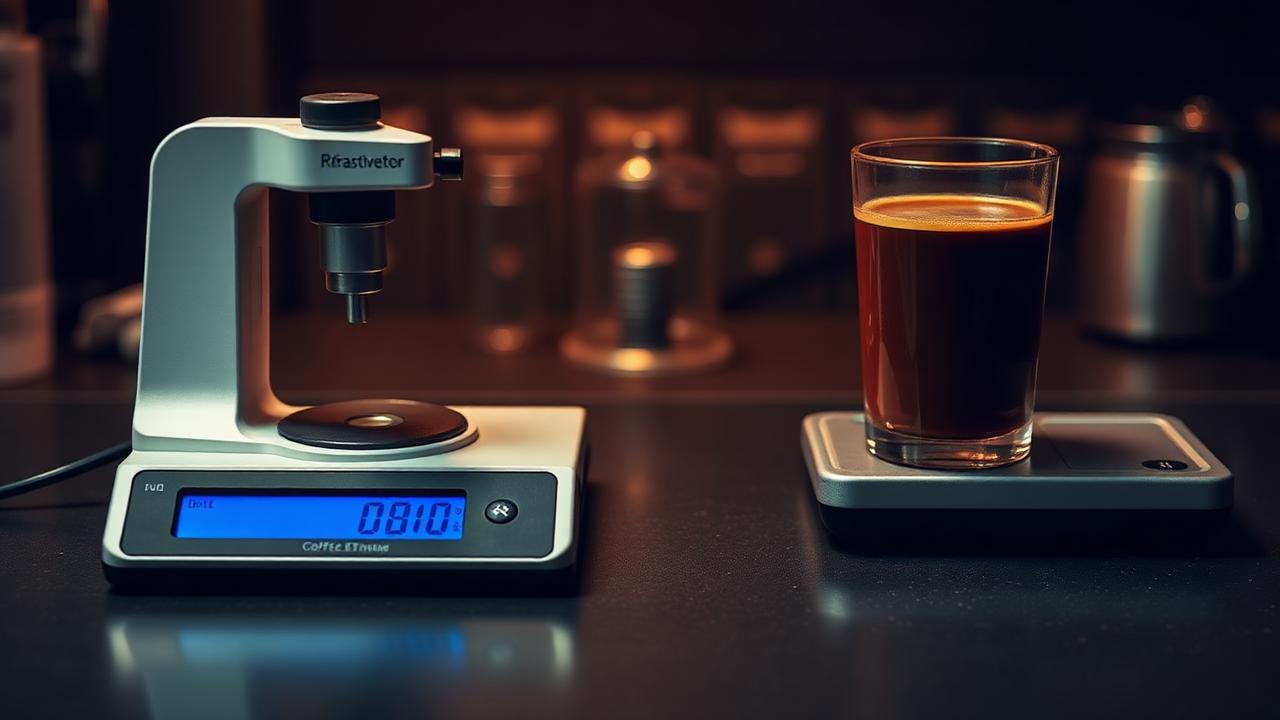
Measuring coffee extraction sounds like the point where the hobby tips into obsession, and sometimes it is. But the underlying concepts — strength and extraction yield — are genuinely useful even without instruments, because they separate two things that home brewers routinely confuse: how much coffee is in your cup, and how much of the coffee you got out of the grounds.
Two numbers, not one
Strength, expressed as total dissolved solids (TDS), is the measured proportion of dissolved material in a beverage sample. Filter coffee is often discussed in examples around one percent TDS, while espresso is more concentrated, but actual readings vary with recipe and method. “Strong” in everyday conversation may refer to intensity, bitterness or caffeine as well as concentration, so it is not a precise measurement. Brew ratio influences strength, but brew method and retained liquid also matter.
Extraction yield estimates how much of the dry coffee dose has dissolved into the beverage. Coffee references often show a target region, but the useful range depends on measurement assumptions, coffee and preference. Grind, contact time, temperature, agitation and water can all affect extraction; ratio affects strength and can also affect extraction through its interaction with the brewing process.
Strength and extraction yield describe different things, but they are not sensory diagnoses by themselves. A low-strength drink may be pleasant or thin; a higher extraction estimate does not guarantee bitterness. Compare the numbers with a tasting note and a repeatable recipe rather than using “weak,” “over-extracted” or “sour” as automatic labels.
The arithmetic
Extraction yield is calculated from strength, beverage mass and dose:
EY (%) = (TDS % × beverage mass in g) ÷ dose in g
For an illustrative filter brew, suppose 15 g of dry coffee produces 230 g of beverage and a suitable instrument reports 1.35% TDS. The arithmetic is (1.35 × 230) ÷ 15 = 20.7%. This is an example, not a claim about a universal ideal. Use the mass of beverage that actually reaches the cup, and make sure the TDS reading and mass refer to the same brew. Grounds and brewers retain liquid, so the water poured in is not interchangeable with the beverage output.
Use the tool: the Extraction Yield Calculator uses dry dose, beverage mass and a TDS reading to calculate estimated extraction yield and dissolved-solids mass. It does not estimate retained water or decide whether a brew tastes good.
Using a refractometer
A coffee refractometer measures how a sample affects light and converts that reading to an estimated concentration. The exact preparation and calibration steps depend on the model, so follow its manual. These general habits can help make your own readings more comparable:
- Prepare a representative sample. Mix the beverage as appropriate for your method, let visible grounds settle, and follow the instrument's guidance on sample temperature.
- Filter when the method or manufacturer calls for it. Particles or oils can affect some readings; do not assume that one filter procedure is required for every instrument or beverage.
- Check calibration and cleanliness according to the manual. Use the specified calibration liquid and clean the measurement surface between samples.
- Repeat a reading if you need to compare close results. Record the instrument model and preparation method; do not report a precision finer than the instrument can support.
No single uncertainty value applies to every refractometer, coffee sample or user. Readings can be affected by calibration, temperature, sample preparation and the instrument itself. Avoid making strong claims from a tiny difference between two calculations. If a result matters, repeat the measurement using the same procedure and consider whether the difference is larger than the variation you see in your own repeats.
The brewing control chart
A brewing control chart plots strength against estimated extraction yield and may show a reference region. The region is a comparison aid, not a universal “ideal,” and labels such as weak, strong or underdeveloped are interpretations rather than instrument outputs. Brew Bench's Sources & Methodology page links to SCA background on the chart and explains that target windows are references rather than pass/fail rules.
Use a chart to ask a better question, not to prescribe a correction automatically. If a brew seems too weak, changing the ratio may be one trial; if it tastes unbalanced, grind or contact time may be worth testing. Make a small adjustment, repeat the brew and record whether you prefer it. A number outside a reference region is not evidence that the cup is defective.
Different coffees and drinkers may prefer different combinations of strength and extraction. A naturally processed lot, a lighter roast or a different brew method can taste different at the same reading. The useful result is a transparent record of how you brewed and measured, not a promise that a box on a chart contains every good cup.
Getting most of the benefit without buying anything
You do not need a refractometer to use these concepts. Weigh everything — dose and beverage output — and you already control the ratio precisely, which fixes strength. Then use taste to diagnose extraction:
- If a brew tastes sharp or thin to you, repeat the recipe and check dose, water and grind before deciding what to change.
- If it tastes drying or bitter, check the coffee and roast as well as the method; try one small adjustment and compare.
- If it seems both sharp and drying, review how evenly the coffee was prepared, but do not assume that taste alone proves channeling or uneven extraction.
A refractometer reports a sample average; it cannot show where water travelled through a coffee bed or whether the cup tasted pleasant. If preparation was uneven, a single average may conceal differences across the brew. This is why measurement and sensory notes are complementary rather than competing ways to judge a cup.
When to stop measuring
Measuring is most valuable during three activities: calibrating a new grinder, comparing two brewers on the same coffee, and diagnosing a recipe that tastes wrong in a way you cannot name. It is least valuable in daily brewing, where it slows you down and gradually replaces tasting with arithmetic.
The healthiest pattern is to measure in bursts. Spend a week building a numeric picture of your setup, write down the parameters that produced the cups you liked, then put the refractometer away and brew to those parameters by taste until something changes — a new grinder, a new origin, a new brewer — and it is worth measuring again.