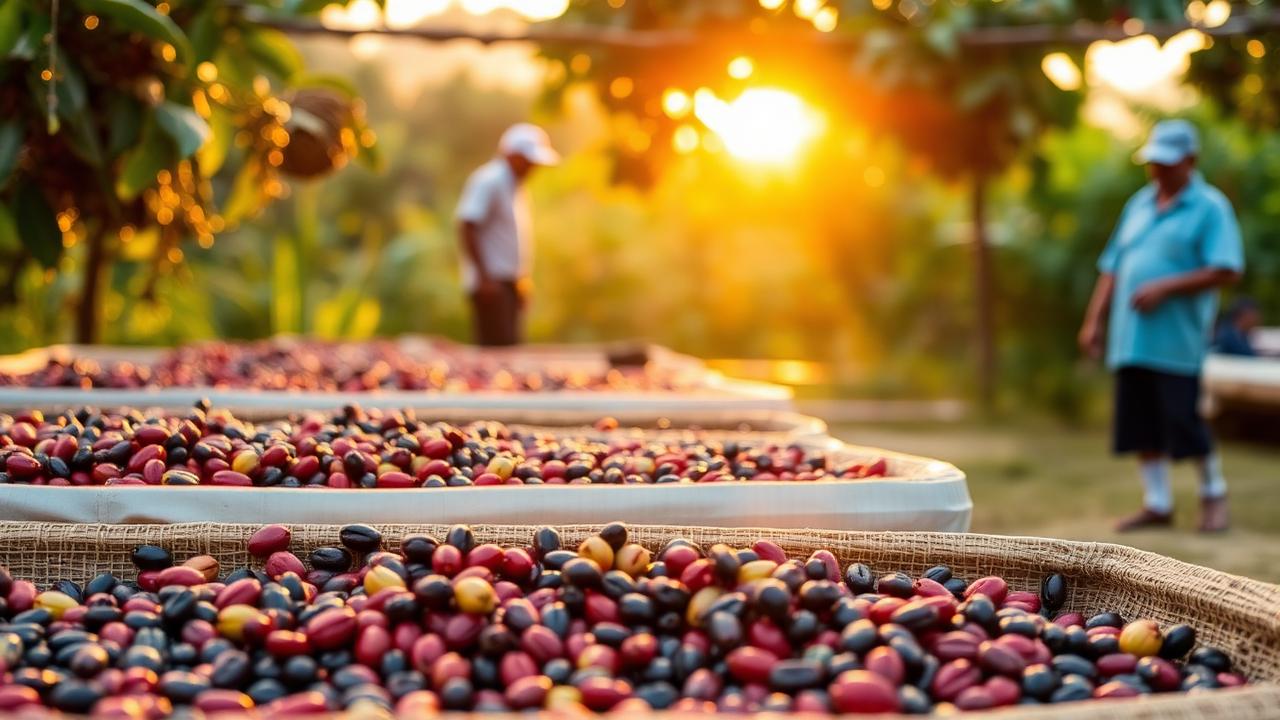
After coffee cherries are picked, producers process them to remove the fruit and prepare the seeds for drying and storage. Processing includes choices about depulping, fermentation, washing and drying. Those choices can affect the green coffee and the flavours a drinker later notices, but they do not determine the cup on their own: variety, growing conditions, harvest quality, storage, roasting and brewing all contribute.
What is being removed
A coffee cherry contains, from the outside in: skin, sweet fruit pulp, a slippery layer of pectin called mucilage, a papery parchment shell, and finally the seed we call the bean. Every processing method is a different answer to the question of how and when to remove those layers, and how much fermentation to allow while they are still attached.
Fermentation can occur while fruit or mucilage is present, and microorganisms may transform available sugars into other compounds. The exact process depends on the producer's method, the coffee and its environment. Fermentation is not automatically a defect or a guarantee of a desirable flavour; producers manage the process and then evaluate the dried coffee. A strong fruit-like note in the brewed cup cannot by itself prove which organism or procedure was involved.
Washed process
In a common washed approach, cherries are depulped, mucilage is removed through a managed step that may include fermentation and washing, and the parchment coffee is dried. The order, equipment and duration vary by producer and conditions, so a single timetable should not be presented as a definition of every washed lot.
Removing most of the fruit before drying gives the producer one set of processing choices and can result in cups described as clean or clearly differentiated. It does not reveal an untouched or purely “intrinsic” bean character: growing conditions, variety, harvest, drying, storage and roast remain part of the result. Citrus, stone fruit and floral notes are possible descriptions, not required features of washed coffee.
Water use, labour and infrastructure depend on the process design and local setting. It is too broad to rank entire countries by one processing method or resource footprint. When environmental impact matters, look for information from the producer or a credible supply-chain source about the specific farm and process.
Brewing note: begin with a recipe that works for your brewer, then taste and adjust. A washed coffee may taste bright, sour, sweet or muted depending on the lot and brew. Do not assume that one grind size or water temperature is required by the process label.
Natural (dry) process
In a natural or dry process, whole cherries are dried before the outer fruit is removed. Drying method and duration vary with climate, cherry condition, bed design and producer practice. Cherries may be moved or turned to support even drying, but schedules are not identical and weather does not affect every lot in the same way.
Natural coffees are sometimes described with berry, stone-fruit or fermented notes, but the process name does not guarantee those flavours. Cup character depends on the coffee and the handling at each stage. Body and acidity also vary, so compare the actual bag description with the cup rather than treating “natural” as shorthand for intense or sweet.
Unwanted fermentation or drying defects can occur, but no single flavour word proves the cause. If a cup tastes sharply sour, musty or otherwise unpleasant, repeat the brew and check the coffee's storage and recipe before making a claim about the producer's process. A careful description separates what you tasted from what you infer.
Brewing note: use your normal recipe as a starting point. If a natural coffee tastes too heavy, try one modest change, such as a slightly coarser grind or a different ratio, and record the result. A process label alone cannot tell you which adjustment will help.
Honey and pulped natural
The middle ground: cherries are depulped, but some or all of the mucilage is left on the bean during drying. No water fermentation stage, no whole fruit. The name refers to the sticky mucilage, not to any honey flavour.
In honey or pulped-natural processing, cherries are depulped while some mucilage remains during drying. Terms such as white, yellow, red and black honey are used by some producers to describe process choices, but naming conventions and definitions are not universal. Ask what the producer means by the label before inferring how much mucilage remained, how the coffee dried or what it will taste like.
This style is associated with several producing regions, including Costa Rica, but practices vary from lot to lot. It may create a cup that a roaster describes as sweet or balanced; neither sweetness nor a particular level of clarity follows automatically from the word “honey.”
Use the tool: the Pour Over Recipe Library scales example pour amounts to a selected dose and ratio. It does not automatically tune a recipe to processing method; compare the result with your own notes before changing the brew.
Anaerobic and carbonic maceration
Some producers use sealed or oxygen-limited fermentation vessels, and terms such as anaerobic or carbonic maceration appear on coffee labels. These labels cover varied methods; they do not specify a single vessel, duration, temperature or microbial culture. Do not assume that a coffee was flushed with carbon dioxide or fermented for a fixed number of hours unless the producer supplies those details.
Roasters may describe such lots with spice, fruit, floral or wine-like notes. These are sensory descriptions, not a reliable way to identify the exact compounds or process. Producers may experiment with controlled fermentation, but the label alone does not tell a buyer whether a specific culture was added or which variables were measured.
These lots can be distinctive, but preference varies and prices depend on sourcing and market decisions as well as processing. If you are curious, buy a small amount, brew it alongside a familiar coffee and write down what you notice. That comparison is more informative than expecting every experimental lot to have a particular taste.
Wet-hulled (giling basah)
Wet-hulling, also called giling basah, is associated with Indonesian coffee production. In this method, parchment is removed at a different point in drying than in many other approaches. Moisture levels, equipment and the rest of the drying process vary, so the exact sequence should be attributed to a named producer or source rather than inferred from the label alone.
Some wet-hulled coffees are described as full-bodied or earthy, but the method does not impose one flavour on every lot. Local climate, harvest, farm, storage and roast all matter. If a bag says “wet-hulled,” use that as useful process information and then evaluate the coffee on its own terms.
How to use this at the shelf
Use process information to choose a comparison, not to guarantee a taste. A washed coffee may be a good trial if you want to compare a roaster's clean or bright description; a natural lot may be worth trying if its bag notes appeal to you; honey-labelled and experimental processes are also worth exploring when the producer gives enough detail. Buy according to your curiosity and budget rather than a fixed rule.
When a coffee surprises you, read the full bag information and keep a tasting note. Processing may help explain what you noticed, but it is one part of a much longer chain. A careful article or label should distinguish a reported process detail from a flavour interpretation and avoid presenting either as a certainty.