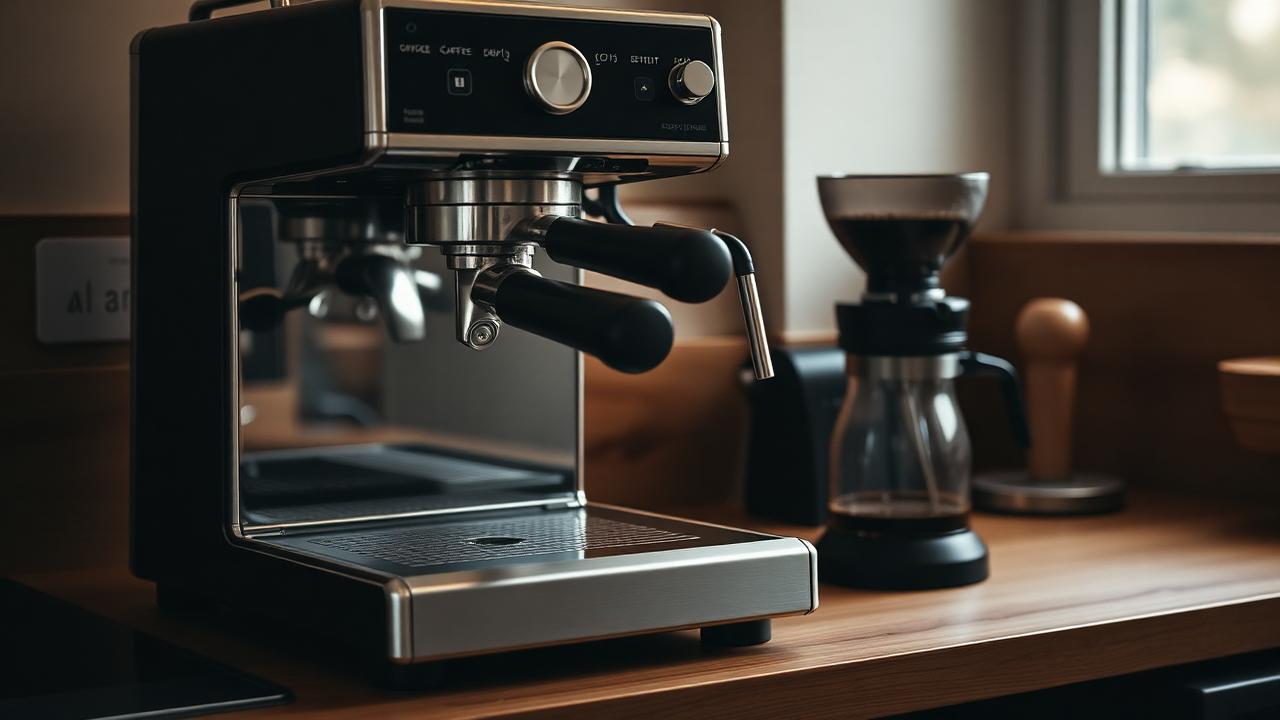
Home espresso can require more equipment and practice than many filter methods, so it helps to decide what you want from a setup before comparing prices. A capable machine paired with a grinder that cannot make useful adjustments may be frustrating, but there is no single budget split that suits every household. Think about the drinks you make, counter space, maintenance, noise and whether you enjoy the process.
Choose a grinder and machine that work together
A grinder that can produce a consistent, adjustable fine grind is important for espresso. The pressure applied by a machine, the basket, puck preparation and coffee bed all influence flow; an uneven bed can contribute to uneven extraction, but it is not possible to diagnose every shot from particle size alone. Grinder and machine should be considered together, and a larger grinder budget is a useful heuristic only if the grinder offers the adjustments and capacity your routine needs.
Espresso often requires smaller grind adjustments than filter brewing. A stepped grinder may work well if the steps are close enough for your coffee and basket, while a stepless design offers continuous adjustment but may take more care to return to a previous setting. Look for a clear specification that says the grinder is suitable for espresso and check owner reviews or the maker's documentation for the adjustment range; do not infer capability from the price or marketing label alone.
Conical and flat burr grinders can both be used for espresso. They differ in design and may produce different cup characteristics, but the burr label alone does not tell you whether a particular model fits your needs. Blade grinders generally do not offer the same particle-size control as burr grinders; for any budget model, verify its actual settings, maintenance requirements and intended use before buying.
What machine features actually matter
Temperature behaviour is worth researching. Machines use different heating and control designs, and warm-up routines, maintenance and measurement points can affect what a user experiences. A product page's boiler type alone does not establish shot-to-shot stability. Look for the manufacturer's operating guidance and independent measurements for the exact model if temperature consistency is important to you.
Pressure and basket type shape the brewing workflow. A machine's advertised pump pressure is not necessarily a direct reading of pressure at the coffee bed. Pressurised baskets create additional resistance at the outlet and can make a usable cup with a wider range of grind settings; non-pressurised baskets require more attention to grind and puck preparation. Neither basket style makes good coffee impossible, but they do offer different levels of control.
Steam capability matters if you regularly make milk drinks. Single-boiler machines may require a transition between brewing and steaming, while other designs can perform both tasks differently. Check the actual workflow, recovery time and maker's instructions for the model rather than assuming that one category always produces weak steam.
Group and portafilter size affect accessory compatibility. A 58 mm size is common in commercial and home equipment, but it is not universal. Measure or confirm the exact model specification before buying baskets, tampers or portafilters; similarly sized accessories are not automatically interchangeable.
Use the tool: the Espresso Parameter Calculator calculates a yield from a selected dose-to-yield ratio and dose, and can record a flow-rate estimate using an entered time. Check your basket instructions and weigh the shot; the tool does not determine hardware compatibility or a universally correct target.
Accessories: essential, useful, and skippable
Useful basics. A scale that fits your drip tray and can measure the dose and beverage output makes recipes easier to repeat. Choose a tamper that fits the basket and follow the machine maker's instructions for cleaning and handling. A knock box is a convenience, not a brewing requirement. A bottomless portafilter can make some flow patterns visible, but splashing and uneven flow have several possible causes; it does not diagnose channelling instantly or replace careful puck preparation.
Optional accessories. A WDT tool is used by some home baristas to distribute grounds before tamping. A dosing funnel can reduce spills, while baskets and puck screens may suit a particular workflow. These items are not mandatory upgrades and their value depends on compatibility, technique and preference. Try to identify a specific problem before purchasing accessories; a new tool cannot compensate for a wrong dose or a dirty machine.
Easy to postpone. Leveling distributors and decorative accessories may be enjoyable, but they are not necessary to learn a basic espresso routine. If you do experiment, change one part of the workflow at a time and record whether it makes preparation cleaner or the resulting cup more enjoyable. This gives a better basis for deciding what earns a permanent place on the counter.
A realistic dialling-in routine
Use the basket's stated capacity as a reference, not a command to fill it to the exact printed number. As an example, a dose near 18 g and a beverage yield near twice that mass can give you a starting recipe; the suitable dose and ratio vary with the basket, coffee and taste. Record the time as well, but do not reject a shot solely because it falls outside a particular timing window. Make a small grind change, taste and compare.
A new coffee may take more than one trial to understand, and the setting may change as the coffee is used. How quickly that happens depends on the beans, packaging, environment, grinder and routine. Keep a note of the dose, yield, time and taste so you can return to a useful starting point instead of assuming every change is caused by age alone.
Water: the overlooked line item
Dissolved minerals can deposit scale in equipment, but the risk and suitable treatment depend on the local water and the specific machine. Some manufacturers prescribe a particular water range or prohibit certain treatment methods; others provide their own descaling procedure. Check the manual before using a filter, remineralised water or descaling product. A general brewing target is not a substitute for the machine maker's maintenance guidance.
Check the water requirements for your exact machine before choosing a treatment method. The Water Hardness Converter can compare hardness values reported in different units, but it does not measure your supply, assess alkalinity or decide which filter is suitable. Use a relevant water report or test and follow the machine maker's instructions.
Compare setups by workflow
- Simple workflow. A manual brewer or single-boiler machine with a grinder intended for espresso can be one starting configuration. Check the exact basket, grinder adjustment range, maintenance needs and workflow for the models you are comparing.
- More control. A temperature-controlled machine and a grinder with useful fine adjustments may suit someone who enjoys experimenting; check model-specific capability rather than assuming that one configuration is best.
- Higher capacity. A machine that can manage several drinks or simultaneous brewing and steaming may fit a busy household, but its price, maintenance and counter space should be weighed against actual use.
Should you buy espresso at all?
Ask what you want from the setup before spending. If you mainly make black coffee, a pour-over or another filter method may meet your needs with less equipment. Espresso may suit you if you regularly make espresso-style or milk drinks, or if you enjoy the adjustments and hands-on process. Compare the cost, learning curve and maintenance with how you actually plan to use the equipment; there is no universal choice.