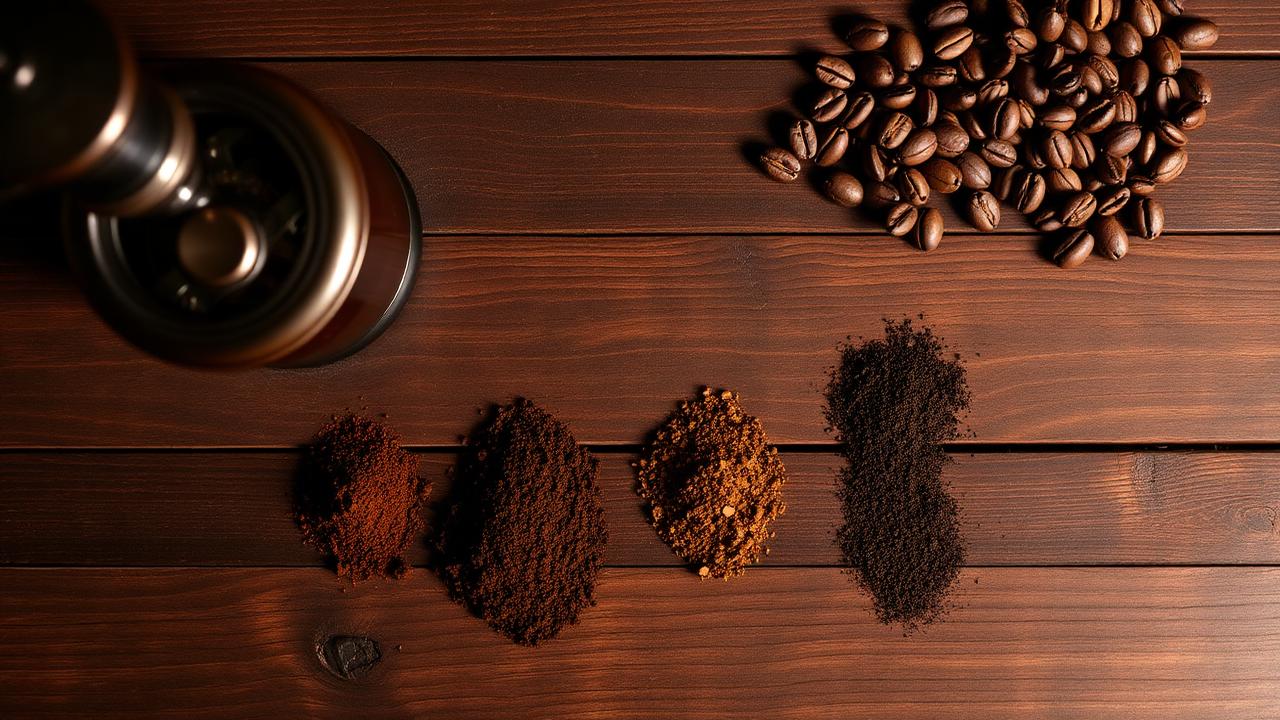
Grind size is one important brewing variable: changing it can affect how quickly water moves through the coffee and how much surface area is exposed. It interacts with dose, filter, water, agitation and brewer design, so it is not the only factor that shapes extraction, flow or body. Treat it as a useful adjustment, not a complete diagnosis.
What is really happening
Grinding creates smaller particles and increases the surface available to water. A finer setting often changes extraction and flow, but the result depends on particle distribution, brewer and technique. Fine particles can slow a filter bed or increase resistance in an espresso basket; a change in flow does not translate into the same flavour in every recipe. One grinder click may be a large or small change depending on the model and setting.
A practical range for each method
- Espresso: often fine enough to create resistance in a non-pressurised basket. The workable setting depends on the grinder, basket, dose and coffee; a visual analogy or shot-time target is only a starting point.
- Moka pot / AeroPress: recipes vary widely. Begin with the brewer's instructions or a trusted recipe, then adjust if flow or taste suggests a change.
- Pour over: many brewers start around a medium or medium-fine setting, but drawdown depends on filter, pour and batch size as well as grind.
- Flat-bottom batch brew: start with the recipe or grinder guidance for your machine; a finer or coarser setting may be needed for a different dose or batch.
- French press: a coarser setting can make plunging easier, although grind distribution and steep method affect sediment and texture too.
- Cold brew: a coarse starting point can be convenient for filtration, but it is not a requirement and does not guarantee a clean cup.
Use the tool: the Grind Size Reference Tool offers broad particle-size and tactile examples. Its levels are not grinder settings or a conversion chart between grinder models; use the maker's guidance and your own measured brew as references.
Calibrating a grinder you have no chart for
Charts are approximations because grinders, burrs, filters and recipes differ. Start with the brewer or grinder instructions, then make a small test using a recipe you can repeat. Record the setting and drawdown, but do not assume that an early finish must be too coarse or a slow bed must be too fine; pouring, filter clogging, dose and technique can also change the time. A few comparable trials can make a personal reference useful for your own setup.
Consistency matters more than absolute size
Grinders produce a distribution of particle sizes rather than particles of one identical size. Different particle sizes can extract and move through a bed differently, but a bitter or sour cup does not by itself prove that fines or “boulders” are responsible. Before changing equipment, use a repeatable recipe to test whether a grind adjustment improves the cup:
- Keep burrs clean; stale oils and compacted grounds distort output.
- Grind at a steady speed rather than forcing beans through.
- If you experiment with sifting, compare the result with an unsifted brew; the extra step changes the coffee dose and may not be worthwhile.
- Follow the grinder maker's guidance for burr inspection and replacement. Wear depends on burr material, coffee, use and maintenance, so a single kilogram figure is not reliable for every home grinder.
Choose one adjustment to test
When a cup is off, first decide whether the issue is repeatable. Check dose, water, filter and preparation before making a large adjustment. Grind is often convenient to test, but temperature, agitation, ratio and water can matter too. Choose one variable based on what you observed, make a modest change and taste again; do not assume that one adjustment always has the largest effect.
Use your own grinder as the reference
Grinder setting numbers are not a universal language. A “20” on one grinder may not resemble a “20” on another, and the same model can shift after cleaning, burr replacement or normal wear. A chart can help you begin, but it should never be presented as a conversion table between machines. The useful reference is a note that connects your own setting to a measured recipe and your observation of the cup.
Choose one familiar coffee and one brewer, then make a small adjustment in only one direction. Record the dose, water, setting, contact time and a short taste note. If the grind change also requires a different pour rate or filter paper, record that rather than attributing the entire result to particle size. A few comparable entries are more useful than a long list of unconnected settings.
Look for process signals
Drawdown time and espresso flow can help you notice a change, but neither is a target that every coffee must meet. A slow drawdown may come from fines, a blocked filter, a pour pattern or the brewer itself. A fast drawdown may be acceptable if the cup is balanced. Treat timing as a prompt to inspect the process, then taste before deciding whether to change the grind again.
Keep the grinder clean according to the manufacturer’s instructions and avoid putting water into burr chambers unless the maker explicitly permits it. If a grinder suddenly behaves differently, inspect for retained grounds, a loose adjustment collar or another visible issue before assuming that the coffee has changed. Seek service advice from the manufacturer or a qualified technician for faults, alignment questions or burr replacement.
Make adjustments safely and consistently
Before cleaning or adjusting a grinder, turn it off and follow the maker's safety instructions. Keep a note of the current setting so you can return to it. Some grinder designs use a different adjustment direction or require the burrs to be moving while changing settings; do not apply a general rule if the manual says otherwise. If adjustment feels stuck, avoid forcing the collar or opening a housing you are not meant to service.
When you compare settings, weigh the same dose and use the same brewer, water and method. Emptying retained grounds, changing beans or replacing a filter can alter the next cup, so record those changes too. This is not laboratory control, but a short, honest note prevents a setting number from being mistaken for a universal recipe.
What this guide does not claim
Terms such as fine, medium and coarse are visual and practical descriptions, not precise particle-size measurements. They are intended to help you communicate a starting point, not to guarantee extraction, taste or brew time. The Grind Size Reference Tool should be read in the same way: use it to make your next measured trial more deliberate, then adjust from the cup.