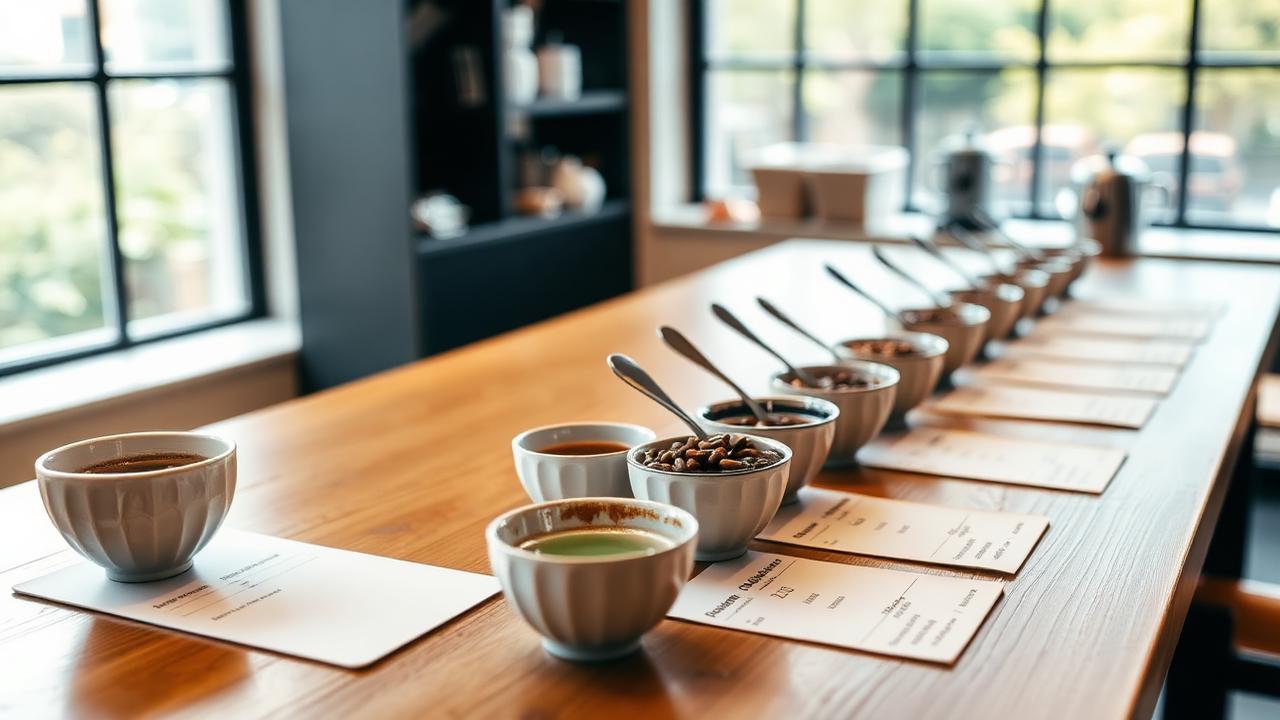
Cupping is a shared tasting method that aims to prepare coffee samples in a consistent way. It reduces some differences caused by separate brewing techniques, but it does not remove every variable: grind, water, temperature, timing and the taster all matter. The basic home setup is simple, and repeated comparisons can help you practise describing what you notice.
What you need
- Identical bowls or glasses, roughly 200–250 ml, one per sample.
- A scale accurate to 0.1 g and a kettle.
- Two spoons per taster, plus a rinse cup.
- A grinder and a scoring sheet.
For a first session, begin with two or three samples so the setup and note-taking stay manageable. There is no fixed sample limit for everyone; fatigue, room conditions and the tasters' experience all affect how many cups remain useful.
The protocol
- Weigh: choose a published or personal coffee-to-water ratio and apply it consistently to every bowl. An older home-cupping example is 8.25 g per 150 ml; this is not presented here as the current SCA Coffee Value Assessment standard.
- Grind and smell dry: grind each sample in the same way, directly into its bowl if practical, and write down any aroma you notice. Keep the grinder and dose consistent between samples.
- Pour: use clean hot water at a measured temperature and start a timer. A four-minute steep is one familiar practice example, not a universal requirement; follow the protocol you have chosen and use it for all samples.
- Break the crust: if your chosen method forms a crust, gently move it aside at the time specified by that method and note the aroma. It is one useful observation among several, not the single most informative moment for every taster.
- Skim: remove the foam and floating grounds with two spoons.
- Taste: wait until the sample is comfortably cool enough for you to taste, then revisit it as it cools. Elapsed time and temperature vary with vessel, room and serving size.
Use a consistent order for your notes
Using the same note sheet and order can make your own sessions easier to compare. A legacy 100-point form may list attributes such as aroma, flavour, aftertaste, acidity, body, balance, sweetness, cleanliness and uniformity, but it is not interchangeable with the current SCA Coffee Value Assessment. Write observations before calculating a score, and do not use an informal home score as a certification or quality claim.
Use the tools: the Legacy 2004-Style Cupping Score Calculator totals the historic ten-attribute format for personal learning; it is not the current SCA Coffee Value Assessment. The Interactive Coffee Flavor Wheel lets you explore related descriptors, but the words remain your own sensory observations.
Tasting as the cup cools
Temperature affects what a taster notices, but there is no single point at which all coffees reveal their character. Taste the samples more than once as they cool and note what changes for you. A cup that becomes less enjoyable is not proof of a processing or roasting defect; record the impression and compare it with the same coffee prepared another way if you want to investigate.
Honest habits
- If practical, conceal labels until everyone has written an initial impression. This can reduce the influence of expectations, but it does not remove all bias.
- Include a familiar coffee as a control in every session.
- Write descriptors before scores, so numbers follow perception rather than shaping it.
- Keep sessions short: twenty minutes of focused tasting beats an hour of fatigue.
Repeat sessions when it suits your budget and schedule, and include a familiar coffee when you want an anchor. With practice, your notes may become more consistent, but improvement has no fixed timetable. The goal is not perfect agreement: it is to make your observations clearer and easier to compare.
Keep the home session modest
A home cupping can be useful without pretending to be a laboratory or a certification event. Use clean vessels, fresh water and a consistent preparation method, then describe what you notice. Do not use an informal score to make commercial, quality-control or health claims about a producer, a roaster or a coffee. A score is a record of one tasting session, by particular people, under particular conditions.
If you are new to tasting, begin with two samples rather than filling a table. A familiar coffee beside one unfamiliar coffee gives you an anchor and reduces the urge to invent dramatic descriptors. Ask each taster to write a few observations privately before discussion. After the reveal, compare the notes as data about the group’s experience, not as proof that one person was right.
Describe first, score second
A practical note can name aroma, flavour, texture, aftertaste and any defect-like impression in plain language. The important part is that the wording refers to what was perceived, not to a guessed origin or processing method. “Dry cocoa aroma, round mouthfeel and a short finish” is more useful than declaring where a coffee came from. If a descriptor is uncertain, write “possibly” or leave it out.
Taste more than once as the cups cool, rinse the spoon between samples and take breaks when your palate becomes tired. Temperature changes what is easy to notice, while fatigue and conversation can change a rating. These are reasons to keep the exercise simple, not reasons to avoid it.
Set up a fair comparison
Use bowls of the same shape and size, weigh each dose and water amount, and label the samples with codes if you are tasting with other people. If you prepare several coffees, grind and pour them in a consistent sequence so the last sample is not always older or cooler than the first. Record the water and the time you began tasting; these details help explain differences in a later session.
Clean the bowls and spoons between sessions and use a separate rinse cup. Avoid wearing strong fragrance or adding flavourings while you are trying to compare aroma. These steps do not make a home tasting objective, but they reduce distractions and make it easier to repeat your own procedure. If you change the ratio, water or grind, write that down rather than comparing the new cups as though nothing changed.
Standards and vocabulary
The Specialty Coffee Association’s current Coffee Value Assessment standards and World Coffee Research’s Sensory Lexicon are useful references when you want a shared vocabulary. Brew Bench’s score page is labelled as a legacy learning format, so use it for structured practice rather than representing it as the current SCA protocol. Links to those sources appear on the Sources & Methodology page. Review them before adapting any formal evaluation process at home.