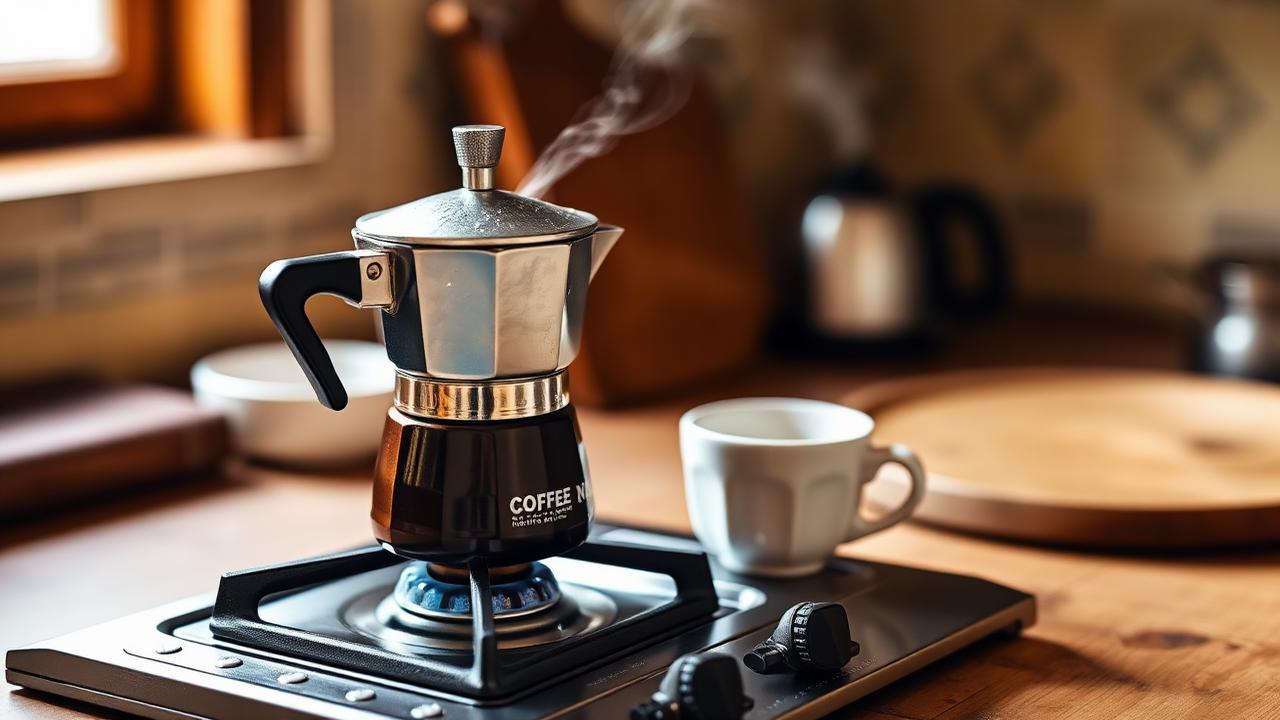
The moka pot is a familiar stovetop brewer, but its instructions and results vary with the model, coffee and heat source. A harsh or burnt-tasting cup can have several causes; it is not fair to attribute the whole reputation of the brewer to one instruction or to promise that a single adjustment will produce a particular flavour. The steps below are general learning notes. Follow the instructions supplied with your pot, especially for filling, assembly, cleaning and heat use.
How a moka pot works
A moka pot uses heated water and vapour pressure to move water through a basket of coffee and into the upper chamber. Its design and operating pressure differ from an espresso machine; a moka pot does not make espresso, even when the resulting drink tastes concentrated. Follow the model's safety and fill markings rather than relying on a pressure figure from another size or manufacturer.
The lower chamber, basket and coffee heat as the pot warms. Some recipes begin with cold water and others with preheated water; these approaches change the time and handling of the brew, and neither should be described as universally wrong. Use a cloth or suitable heat protection when handling hot metal, and never assemble, open or cool the pot in a way that conflicts with the maker's directions.
The pre-heated method
If the maker permits a preheated-water method, heat water separately and fill only to the level marked in the manual, keeping the safety valve clear. Use heat protection when handling the chamber. Fill the basket as instructed, level the grounds without compressing them unless your specific manual says otherwise, and assemble the pot securely. Use a heat setting suited to the model and the burner.
Watch the brew and keep the handle away from flame or hot elements. Flow speed and colour vary, so treat them as observations rather than fixed measures of extraction. If the pot sputters violently, overheats or behaves unusually, remove it from heat only if safe to do so and follow the manufacturer's troubleshooting guidance. Do not cool a pressurised pot with water unless its instructions explicitly recommend that method.
Many brewers stop heating when the main flow changes or before the pot sputters, but the exact cue depends on the device and recipe. You can compare an earlier stop with a longer brew if the manual permits it. Taste the results and note which you prefer instead of assuming that the final liquid is always bitter or that stopping at one visual cue guarantees a better cup.
Grind and dose
A grind somewhat finer than many filter recipes is a common starting point, but grind descriptions such as “table salt” are approximate. If the basket fills unevenly or the pot behaves abnormally, check the manual and adjust the grind cautiously. A cup that tastes weak or sharp can have causes beyond grind size, including dose, heat and the coffee itself.
Most moka baskets are designed to hold a particular amount of coffee. Do not compress the grounds unless the maker instructs you to, and do not modify the filter or safety components. Fill and level the basket according to its instructions. A basket filled to the intended capacity is easier to repeat; any claim that a certain dose or tamp guarantees channeling is too broad.
Many moka pots are intended to brew a set volume, so reducing the water while leaving the basket partly filled may change the result. Check the model's guidance before trying a smaller dose. A smaller pot can be more convenient for a single serving, but cup size, serving preference and the maker's stated capacity all matter.
Use the tool: the Brewing Equipment Size Guide provides prompts for comparing brewer categories and intended serving size. It does not verify the capacity of a particular moka pot; check the markings and manual for your exact model.
Heat control
Use a heat source and setting that the manufacturer permits. A lower, controlled setting may make it easier to observe the brew, but the correct choice depends on pot size, burner and recipe. High heat can make the process harder to control and may heat the handle or surroundings; keep the handle away from flame and do not leave the pot unattended.
For induction, confirm that the pot is compatible or use only an adapter approved for that setup. On gas, keep the flame positioned as the maker recommends and make sure it does not extend toward the handle. Stop if the pot is unstable or the handle becomes dangerously hot.
Aluminium versus stainless steel
Aluminium and stainless-steel pots differ in weight, heating behaviour, compatibility and care instructions. Cleaning advice varies by model and manufacturer; do not assume that every aluminium pot must be cleaned the same way or that every steel model is dishwasher-safe. Check the manual, rinse and dry the parts as directed, and remove coffee residue from the filter plate and gasket area.
Inspect the gasket and other wear parts periodically. Replace them when the manufacturer recommends it or when a damaged or loose seal is evident. If steam escapes around the seam or the pot fails to operate normally, stop using it until you have checked the manual or obtained replacement parts from a suitable source. Do not treat one calendar interval as appropriate for every pot.
Troubleshooting
- Bitter or metallic to you: repeat the recipe and check heat, coffee freshness, cleaning and brew duration; change one step at a time.
- Weak or sharp: check that the basket and water chamber were filled as directed, then review grind, heat and the coffee itself.
- Unexpected sputtering: remove the pot from heat if safe, let it cool as directed and inspect assembly and parts before trying again. Never force open a hot or pressurised pot.
- No flow: check the filter plate, basket, gasket and grind only after the pot has cooled completely. Follow the manufacturer's troubleshooting and safety instructions.
- Off flavour: clean the parts according to the manual and check for retained coffee residue. Cleaning methods differ by material and model.
Drinking it
Moka coffee is usually more concentrated than a typical filter cup, but its strength depends on the pot, coffee, dose and water that reaches the cup. Taste it neat or dilute a small serving with hot water or milk to find a proportion you enjoy. It is not espresso, and its texture will differ from a machine-made espresso drink.
When the brew is finished, remove the pot from heat and pour it into a serving vessel if convenient. This stops the pot from continuing to sit on the heat source, but it does not guarantee a particular flavour. Let the pot cool before cleaning and follow the instructions for handling hot parts.